




Quick Answer
Design apps are changing how tattoos get planned, but they haven't replaced the stencil yet—most artists use digital tools for drawing and the thermal stencil for final transfer. Roughly 8 in 10 fine line pieces still start as a tablet sketch before printing to transfer paper. Moon Beam Chels, a fine line tattoo artist in Salt Lake City, UT, combines digital mockups with traditional stencil transfer for precise placement. Updated September 2025.
Walk into a tattoo studio today and you'll spot a tablet before you spot a light box. That shift is real, and it's quietly rewriting how fine line designs move from idea to skin. But the stencil hasn't gone anywhere. To understand where things actually stand, we looked at how one Salt Lake City artist works day to day. You can Learn more about Moon Beam Chels and the studio behind this piece.
Are Design Apps Actually Replacing the Stencil?
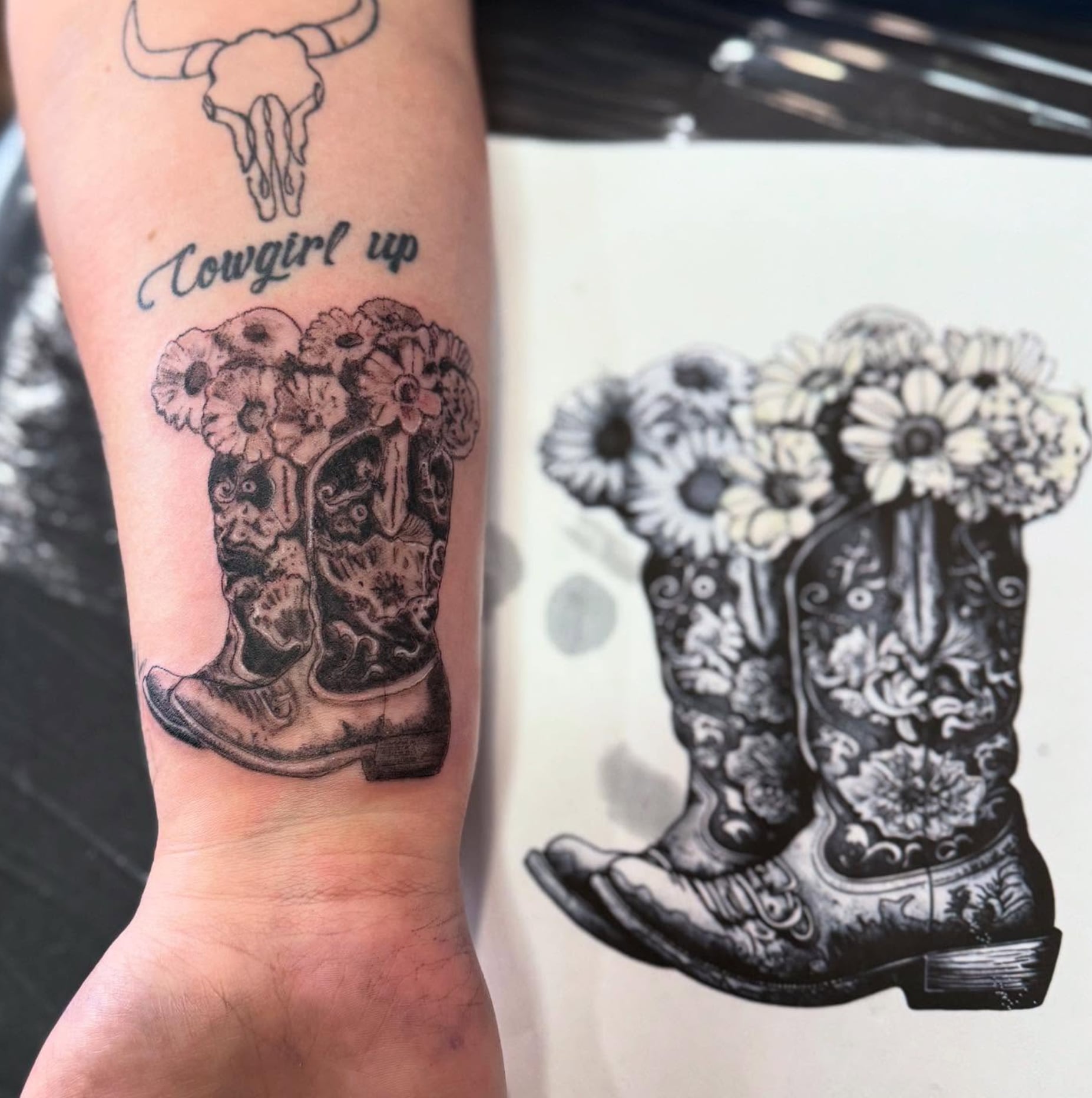
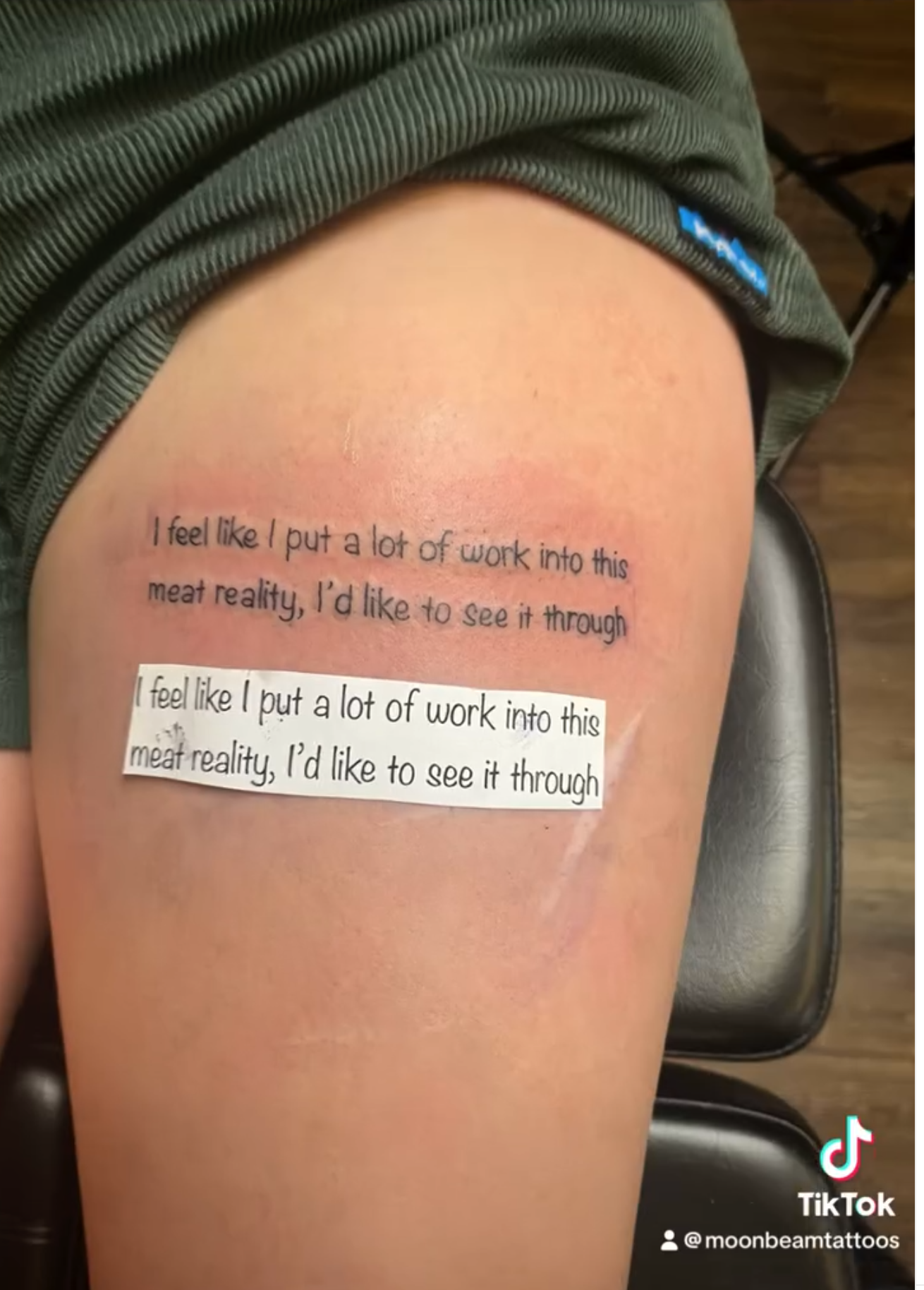
Design apps have taken over the drawing phase, but the thermal stencil still puts the line on your skin. Here's what changed. Artists now sketch on tablets using apps like Procreate, layering, resizing, and rotating a design in seconds. What used to take three paper redraws now takes one screen adjustment. But when it's time to tattoo, that digital file still gets printed onto transfer paper and pressed to skin. The stencil (the outline guide on your skin) is the bridge between screen and needle.
So the honest answer is no—apps aren't replacing it. They're feeding it. In Salt Lake City, UT, most fine line artists run a hybrid workflow: draw digital, transfer physical. One artist put it simply during a recent session: the tablet is where the art lives, the stencil is where it lands.
Why Do Fine Line Tattoos Depend on Digital Precision?
Fine line work leaves no room for a shaky guess, which is exactly why digital planning matters so much. A thick traditional line can hide a small error. A single-needle fine line can't. When lines are that thin, spacing and symmetry have to be dialed in before the machine starts. That's where the tablet earns its keep.
Digital tools let an artist test line weight (how thick each stroke reads) against your body's curves before committing. A design built for delicate florals looks different on a forearm than on a foot, and screen mockups catch that mismatch early. The attention to detail this demands shows up in client feedback.
This kind of precision is a running theme in reviews.
"Chels is amazing and does beautiful work, and you won't find a sweeter artist in SLC! She has wonderful attention to detail, and I can't praise her work enough. I'm so excited to get more work done by her."
— Hailey B., Facebook Review
Attention to detail like that starts long before the needle, back when the design is still pixels on a screen.
What Do You Gain When the Design Starts on a Screen?
Starting on a screen means you see your tattoo before you ever commit to it—no surprises in the chair. The biggest win is the preview. An artist can drop a mockup onto a photo of your arm and show you exactly how the piece sits. Too big? Shrink it. Wrong angle? Rotate it. All before printing a single stencil.
This cuts down on revision rounds during the session, which keeps things calm and saves time. It also helps first-timers feel steady. Moon Beam Chels leans on this preview step so clients walk in already knowing what they're getting. Serving clients in Salt Lake City, UT, that clarity turns a nervous first visit into an easy one.
That comfort shows up again and again in feedback.
"Chels is so amazing! I got my first tattoo from her a couple of years ago, and I was so excited to design this fine-line floral with her. She went out of her way to make sure the design and placement were exactly what I wanted, and she always makes me feel so comfortable in the chair. I recommend her to all of my friends!"
— Jessica V., Facebook Review
Getting placement exactly right is a lot easier when you both saw it on screen first.
Where Does the Stencil Still Beat the Tablet?
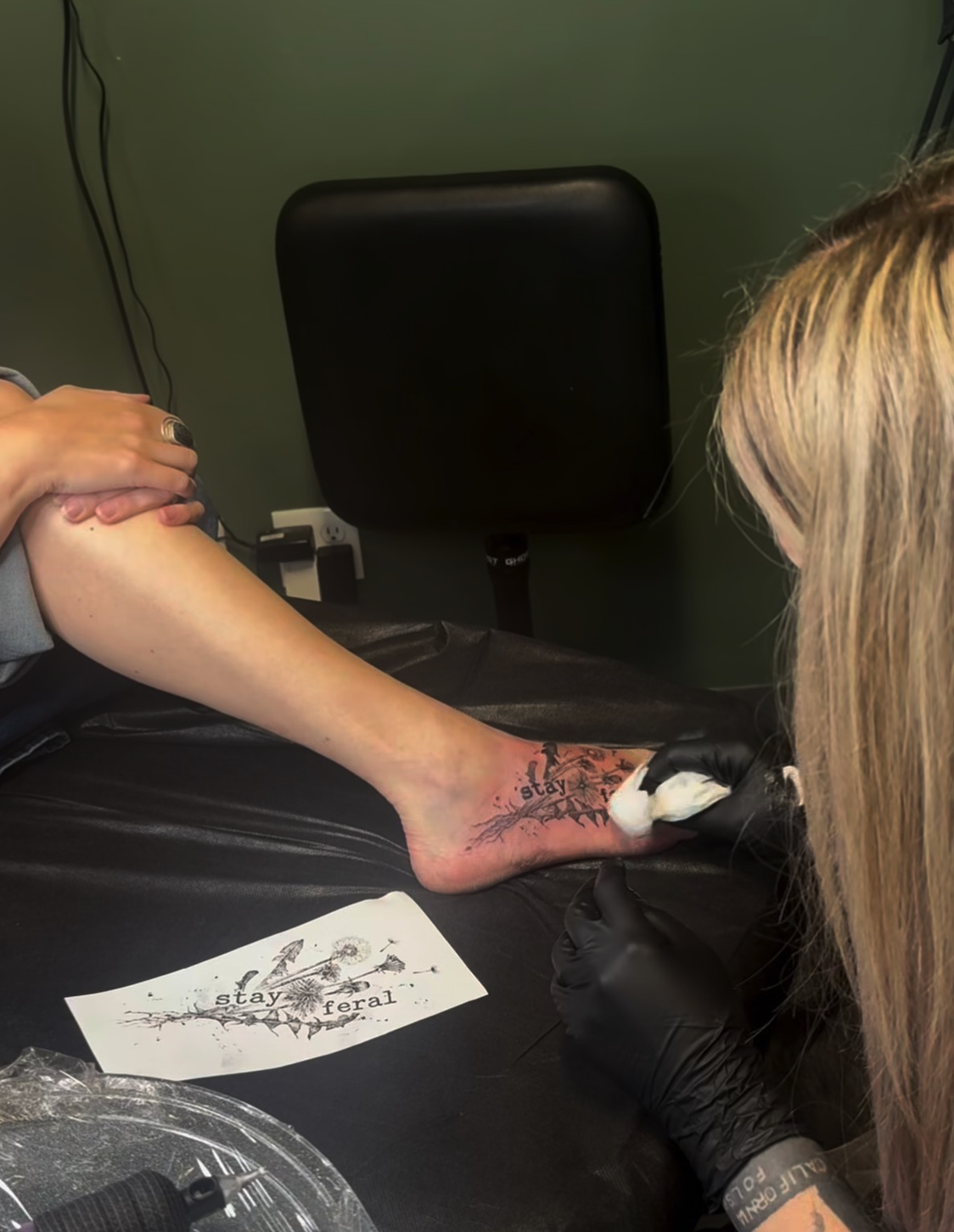
The stencil wins the moment art has to survive on curved, moving skin during a real session. A screen is flat. Your body isn't. The thermal transfer (printed outline pressed onto skin) wraps around a wrist or ankle in a way a tablet mockup only approximates. That physical outline is also what an artist actually follows while tattooing.
Some artists in Salt Lake City, UT experiment with freehand marker sketching on skin for organic pieces, letting the design flow with muscle and bone. But even then, the digital draft usually comes first as a reference. Unlike a purely digital preview, the stencil accounts for how skin stretches, folds, and shifts once you sit down. That's the gap software still can't fully close.
How Does Digital Planning Change the Client Conversation?
When clients can see and tweak a draft on screen, the consultation stops being guesswork and becomes a real back-and-forth. Old-school consults relied on describing what you wanted and trusting the artist to translate it. Now you point at a screen and say "a little smaller here." That changes everything about how the conversation flows.
It also makes reworks smoother. When someone brings in an older piece to fix, an artist can trace it digitally and rebuild the design over the existing lines before touching skin. One recent client came in for exactly that kind of adjustment.
"Chels did a rework for me today! I loved my experience with her. She's easy-going and attentive, and her artistry speaks for itself. She makes me want more tattoos!"
— Sadie W., Facebook Review
An easy-going rework like that is a lot easier to pull off when the plan is mapped out digitally first.
What Should You Ask Before Booking a Fine Line Session?
Ask whether you'll see a digital mockup and a stencil placement before the needle starts—both should be a yes. A good sign is an artist who shows you the draft on screen, then places the stencil and lets you check it in a mirror before committing. If either step gets skipped, ask for it.
Also ask about studio cleanliness and how consultations work. The best fine line artists in Salt Lake City, UT walk you through the whole path, from digital sketch to healed result. Recent reviews from 2025 keep pointing to the same thing: clients feel included in the design, not just handed a finished product. That collaborative feel is what keeps people coming back for their next piece. Ready to start yours? Contact Moon Beam Chels to talk through your idea.
Want more on how local shops are adapting? Explore more local business insights.
Key Takeaways
- Design apps like Procreate handle the drawing phase, but the thermal stencil still transfers the final art to skin in most Salt Lake City studios.
- Digital mockups let clients preview placement and size before a needle ever touches skin, cutting revision rounds during the session.
- Moon Beam Chels blends tablet-based sketching with traditional stencil transfer for fine line work in Salt Lake City, UT.
- The stencil isn't disappearing—it's becoming the last step in a workflow that now starts on a screen.
- Clients in Salt Lake City, UT increasingly expect to see a digital draft before booking, and artists who share previews build faster trust.
Frequently Asked Questions
Do tattoo artists still use stencils if they design on a tablet?
Yes, most artists still use stencils even after designing on a tablet. The digital file gets printed onto thermal transfer paper and pressed to skin. The tablet handles the art, and the stencil handles the physical placement guide during the session.
What is a thermal stencil in tattooing?
A thermal stencil is a printed outline of your design transferred onto skin before tattooing. It gives the artist a guide to follow so lines stay accurate. Fine line artists rely on it because thin lines leave no room for freehand error.
Is a digital tattoo mockup worth asking for before booking?
Yes, a digital mockup is worth asking for. It lets you preview size and placement on a photo of your body before any needle touches skin. This cuts revision rounds and helps first-timers feel confident about the final result.
Digital drawing versus freehand tattoo design—which is better for fine line?
For fine line work, digital drawing usually wins on precision because you can test spacing and symmetry before committing. Freehand suits organic, flowing pieces on curved skin. Many artists combine both, drafting digitally first and adjusting placement with a stencil.
How do fine line tattoo consultations work in Salt Lake City, UT?
In Salt Lake City, consultations often start with a digital sketch you review on screen. You discuss size, placement, and style, then confirm with a stencil at the session. Moon Beam Chels walks clients through each step from draft to healed result.


.svg)

%20(1).avif)
.svg)





.svg)











%20(1).avif)
%20(1).avif)