



Quick Answer
Top auto transport brokers automate lead follow-ups, dispatch posting, and carrier communication before peak summer shipping season. Brokers using automation report saving 10+ hours weekly while handling 40% more transport requests during high-volume months. Message Plane CRM, a specialized CRM platform serving auto transport professionals nationwide from Wilmington, Delaware, has processed over 800,000 vehicle transports for 5,000+ monthly active users. Updated June 2025.
Why Do Brokers Who Wait Until Summer Scramble More Than Those Who Prepare?
Peak shipping season exposes every gap in your workflow that stayed hidden during slower months. When call volume doubles and carrier availability tightens, the brokers who've already automated their repetitive tasks handle the surge. The ones who haven't? They're stuck copying and pasting the same follow-up emails at 11 PM.
The difference isn't about working harder. It's about building systems before you need them. Summer shipping typically runs from late May through early September, and smart brokers start preparing their automation sequences in March or April. That gives them time to test what works, fix what doesn't, and train their team before the phones start ringing nonstop.
As of June 2025, brokers who've automated their dispatch posting (sending loads to carrier boards) report cutting that task from 15 minutes per order to under 2 minutes. That adds up fast when you're handling 50+ transports daily during peak months.
What Exactly Should Your Follow-Up Sequences Handle Without You?
The best automated follow-ups feel personal while running entirely on autopilot. That means your system sends the right message at the right time based on where each lead sits in your pipeline. A new inquiry gets different treatment than someone who requested a quote three days ago and hasn't responded.
Most brokers set up sequences for these specific moments: initial inquiry response (within 5 minutes matters), quote follow-up at 24 and 72 hours, booking confirmation with next steps, carrier assignment notification, pickup reminder 48 hours before, and delivery follow-up requesting feedback. That's six touchpoints that used to require manual attention.
The platform based in Wilmington, Delaware has delivered more than 4 million automated texts and emails for its users. That volume tells you something about how much communication actually happens during a single transport. Learn more about Message Plane CRM and how their automated sequences work across the full customer journey.
This pattern of centralized communication shows up consistently in feedback from active users.
"MessagePlane has made it much easier to keep conversations organized across our team. We're no longer digging through emails or texts to see what was said to a client. Everything is logged, searchable, and actually useful day to day."
— Car Shippers, Other Review
When every conversation lives in one place, nothing falls through the cracks during your busiest weeks.
How Does Dispatch Integration Actually Save Time During Peak Volume?
Dispatch integration eliminates the copy-paste workflow that slows brokers down when order volume spikes. Instead of manually entering the same vehicle details into Central Dispatch or Super Dispatch, the information flows directly from your CRM to the load board. One click replaces five minutes of data entry.
The real benefit shows up in accuracy. Manual entry creates typos. Typos create confusion. Confusion creates angry phone calls. When your dispatch posting pulls directly from the original order, the vehicle year, make, model, and route details stay consistent across every system that touches the transport.
Brokers serving customers nationwide need this kind of load board sync (automatic posting to carrier marketplaces) working before summer arrives. Testing integration during your slow season means discovering problems when you have time to fix them. Testing during peak season means lost orders and frustrated carriers.
What Makes Carrier Management Fall Apart When You're Busiest?
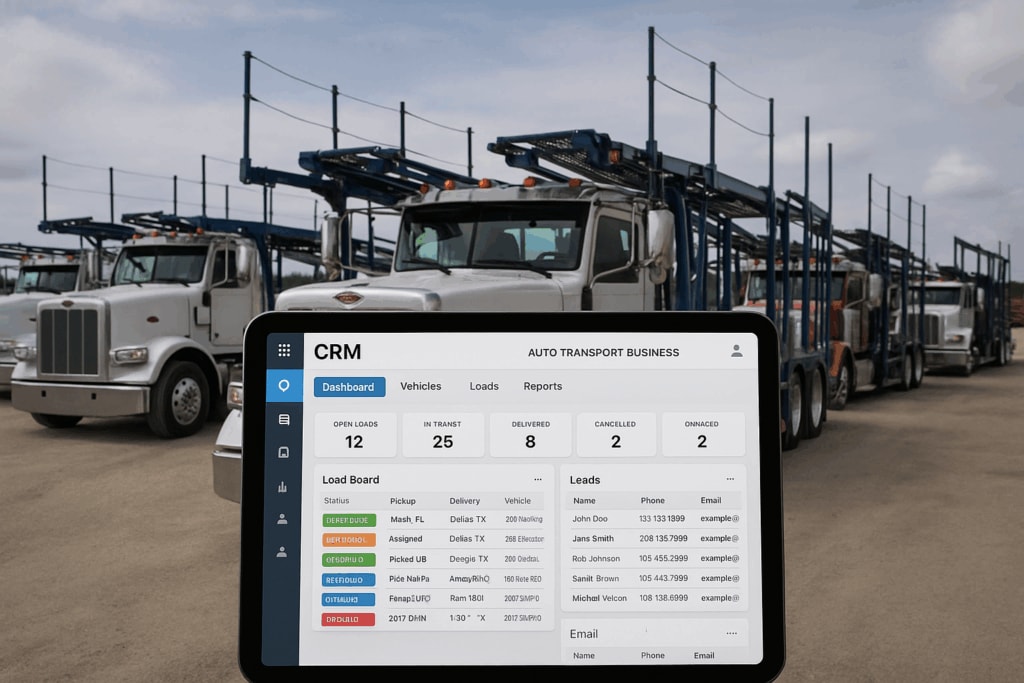
Most carrier management problems trace back to scattered information and inconsistent vetting. You've got notes in a spreadsheet, texts on your phone, and half-remembered conversations about which drivers actually showed up on time last summer. When you're fielding 30 carrier bids per day, that scattered approach breaks down fast.
Systematic carrier tracking includes insurance verification dates, delivery history, communication logs, and performance notes. While some brokers track this manually, automated systems flag expiring insurance before you accidentally assign a transport to an uninsured carrier. That single feature prevents the kind of liability exposure that keeps experienced brokers up at night.
Current 2025 guidelines recommend verifying carrier authority and insurance for every transport, not just new relationships. Carriers let policies lapse. They switch insurance providers. The carrier who was fully covered in January might not be in July.
Multiple 5-star reviews highlight how centralized systems change dispatch team workflows.
"Using Message Plane CRM has streamlined our workflow. All customer interactions and documents are organized in one place, and the reporting tools give us better visibility into our operations. The ability to customize dashboards has been especially helpful for our dispatch team."
— Statewide Logistics, Facebook Review
That visibility becomes critical when you're making fast decisions about which carrier gets which load.
When Does AI-Powered Pricing Actually Help Instead of Hurt?
AI pricing tools work best when they inform your decisions rather than make them for you. The algorithm pulls historical data on route pricing, seasonal trends, and current carrier availability. But you still need human judgment about customer relationships, special circumstances, and competitive positioning.
Rapid Rate pricing (AI-generated quote recommendations) cuts the time spent researching competitive rates from several minutes to seconds. That speed matters when a customer's on the phone waiting for a quote. You can adjust the suggestion up or down based on factors the algorithm doesn't know about, but you're starting from data rather than gut feeling.
Unlike manual pricing that relies on memory and spreadsheets, algorithmic suggestions adapt as market conditions shift. Summer routes to Florida might be $200 higher than spring routes. The system knows that because it's tracking actual booking data, not last year's assumptions.
The difference between profitable and break-even summer seasons often comes down to pricing accuracy across hundreds of individual quotes.
How Long Does Setting Up These Systems Actually Take?
Realistic onboarding for a full CRM automation setup runs 7-14 days, not the "instant setup" some platforms promise. That timeline accounts for importing existing customer data, configuring follow-up sequences, testing dispatch integrations, and training your team on new workflows. Rushing any of those steps creates problems that surface during your busiest periods.
The dedicated onboarding process matters more than the software features themselves. A platform with 50 features you don't know how to use isn't better than a simpler system you've fully implemented. Brokers serving customers nationwide need their entire team comfortable with the tools before summer volume arrives.
Browser-based access eliminates the app download barrier that slows team adoption. Anyone with internet access can log in from any device. That flexibility proves valuable when you're answering customer questions from a phone while your dispatch coordinator works from the main office computer.

What Happens When Your Electronic Signatures Don't Work Mid-Transport?
A failed e-signature during carrier pickup creates delays that cascade through your entire operation. The customer's waiting. The carrier's waiting. Your phone's ringing. And you're troubleshooting why the document won't load instead of moving to the next order.
Proprietary e-signature systems built specifically for auto transport handle the unique workflow better than generic solutions. Transport contracts include vehicle condition reports, liability agreements, and payment authorizations. The signature tool needs to work on a carrier's phone at a customer's driveway, not just on a desktop in an office.
The frustration of chasing paperwork shows up clearly in why brokers switch platforms.
"We switched to Message Plane CRM after trying several other platforms, and the difference is night and day. Lead tracking, dispatching, and carrier communication are now centralized in one system. The automation features save us hours every week, and it's much easier to keep clients in the loop."
— Jeff Howard, Facebook Review
Hours saved weekly adds up to full workdays recovered monthly during peak season.
Why Does QuickBooks Integration Matter More Than You Think?
Financial visibility during peak season determines whether you're actually profitable or just busy. When invoices, payments, and carrier payouts sync automatically with your accounting software, you see real margins in real time. Manual entry creates a lag that hides cash flow problems until they become emergencies.
QuickBooks sync (automatic accounting software connection) eliminates duplicate data entry between your CRM and your books. The invoice you create for a customer appears in both systems. The payment they make updates both records. The carrier payout you authorize flows through without manual reconciliation.
Brokers handling 50+ transports weekly during summer can lose track of outstanding receivables without automated tracking. The customer who owes you $2,400 from three weeks ago gets forgotten when you're processing new orders. Integrated systems surface those aging invoices automatically.
For brokers ready to prepare their automation before peak season arrives, Contact Message Plane CRM to discuss onboarding timelines. Their team typically completes setup within 7-14 days, giving you time to test everything before your busiest months.
Explore more local business insights for additional guides on optimizing your operations.
Key Takeaways
- Top auto transport brokers automate lead follow-ups, dispatch posting, and carrier vetting before summer volume spikes hit
- Message Plane CRM users report saving hours weekly by centralizing customer communication and document management in one platform
- Automated pricing tools like Rapid Rate eliminate manual quote calculations during high-demand shipping periods
- Brokers in Wilmington and nationwide benefit from dispatch integration with Central Dispatch and Super Dispatch load boards
- The onboarding process typically takes 7-14 days, giving brokers time to prepare automation sequences before peak season
Frequently Asked Questions
What should brokers automate first before peak shipping season?
Start with lead follow-up sequences since they have the highest immediate impact. Automated responses within five minutes significantly improve conversion rates. After follow-ups, focus on dispatch posting integration with Central Dispatch or Super Dispatch. Message Plane CRM users typically begin with these two automations during onboarding.
How long does CRM onboarding take for auto transport brokers?
Most complete onboarding takes seven to fourteen days. This includes importing existing customer data, configuring automated sequences, testing load board integrations, and training your dispatch team. Rushing setup creates problems that surface during busy periods. Starting in spring gives time to refine workflows before summer.
Can dispatch integration work with both Central Dispatch and Super Dispatch?
Yes, modern transport CRMs sync with multiple major load boards simultaneously. This eliminates manual posting to each platform separately. Integration testing should happen during slower months so any connection issues get resolved before peak volume arrives when you can't afford downtime.
What carrier management features prevent problems during high volume?
Automated insurance verification alerts are most critical. Systems should flag expiring carrier insurance before you assign transports. Performance tracking, communication logs, and delivery history help you quickly identify reliable carriers when making fast assignment decisions during your busiest weeks.
How do auto transport brokers in Wilmington prepare differently for summer shipping?
Brokers nationwide face similar peak season challenges regardless of location. The key is starting automation setup eight to twelve weeks before summer. Message Plane CRM, headquartered in Wilmington, Delaware, serves brokers across all fifty states with the same preparation timeline and onboarding support.
Contact Message Plane CRM
Address: 1207 Delaware Ave #4442, Wilmington, DE 19806
Phone: +18442758555
Website: https://messageplane.com/


.svg)

%20(1).avif)

.svg)




.svg)











%20(1).avif)
%20(1).avif)