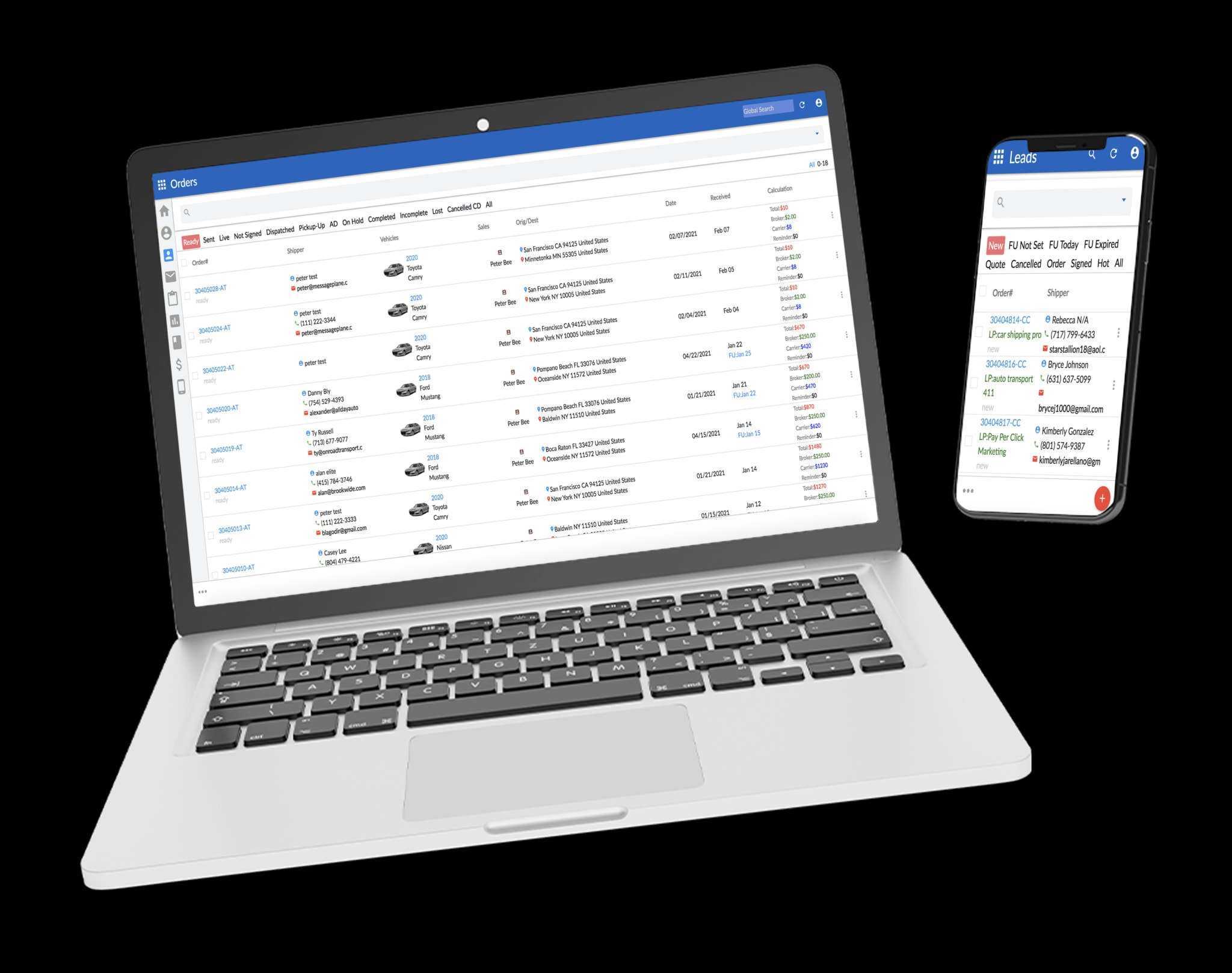







Quick Answer
Auto transport brokers consolidate dispatch, calling, and payment systems into one CRM to eliminate workflow chaos and reduce weekly admin time by 8-12 hours. A unified platform centralizes lead tracking, carrier communication, and automated follow-ups in one searchable location. Message Plane CRM, a specialized auto transport software provider headquartered in Wilmington, Delaware, has processed over 800,000 vehicle transports for 5,000+ monthly active users nationwide. Updated May 2025.
What Happens When Brokers Run Four Systems at Once?
Juggling separate tools for dispatch, lead management, calling, and payments creates information gaps that cost brokers hours every week. When your dispatch board doesn't talk to your call logs, you're constantly switching tabs to piece together what happened with a customer. One rep might promise a pickup window while another books something completely different. And nobody knows until the customer calls angry.
The real cost isn't just the monthly subscriptions—it's the mental load. Brokers describe spending the first hour of every day just catching up on what happened overnight across different platforms. That's time not spent booking loads or building carrier relationships. The scattered approach also makes training new dispatchers a nightmare since they need to learn four different interfaces before they're useful.
As of May 2025, brokers processing high volumes increasingly recognize that tool consolidation (combining multiple software functions into one platform) directly impacts their bottom line. Learn more about Message Plane CRM to see how unified systems address these exact pain points.
Why Do Cheap Software Stacks Get Expensive Later?
Piecing together budget tools saves money upfront but creates hidden costs through data sync failures, duplicate entries, and manual workarounds. Every time information doesn't transfer correctly between systems, someone has to fix it by hand. Those ten-minute fixes add up to full workdays by month's end.
The bigger issue shows up when things go wrong. If a customer disputes a charge, you're digging through three different platforms to reconstruct the conversation history. Was the price quoted in the CRM or the separate quoting tool? Did the confirmation go out from the email system or the text platform? Without a single source of truth, resolving disputes takes three times longer than it should.
This pattern of integration headaches drove many Wilmington-area brokers to look for alternatives. The difference between a collection of tools and an actual platform comes down to whether data flows automatically or requires constant human intervention.
That frustration shows up in what customers share about switching. One operator put it clearly:
"We switched to Message Plane CRM after trying several other platforms, and the difference is night and day. Lead tracking, dispatching, and carrier communication are now centralized in one system. The automation features save us hours every week, and it's much easier to keep clients in the loop."
— Jeff Howard, Facebook Review
When someone describes the difference as "night and day," they're usually talking about those invisible time drains that finally disappeared.
What Makes Conversation Tracking Actually Useful Day to Day?
Searchable conversation logs eliminate the daily detective work of figuring out what was promised to which customer. When every text, email, and call note lives in one place, any team member can pick up where another left off. The customer never has to repeat themselves, and the broker never has to guess what was said.
This matters most during handoffs. A morning dispatcher books a load, an afternoon dispatcher handles a pickup change, and an evening dispatcher fields the delivery confirmation. Without centralized logs, each person is starting from scratch. With them, the conversation flows as if one person handled everything.
The practical benefit extends to dispute resolution too. Current 2025 guidelines in the auto transport industry emphasize documentation as the primary protection against chargebacks and complaints. Having timestamped records of every customer interaction turns a he-said-she-said situation into a simple fact check.
Teams across the country have noticed how this changes their daily rhythm:
"MessagePlane has made it much easier to keep conversations organized across our team. We're no longer digging through emails or texts to see what was said to a client. Everything is logged, searchable, and actually useful day to day."
— Car Shippers, Other Review
That phrase "actually useful day to day" captures something important—plenty of features sound good in a demo but never get used in practice. Searchable logs are the opposite: boring on paper, indispensable in reality.
When Does Automation Actually Save Time Instead of Creating More Work?
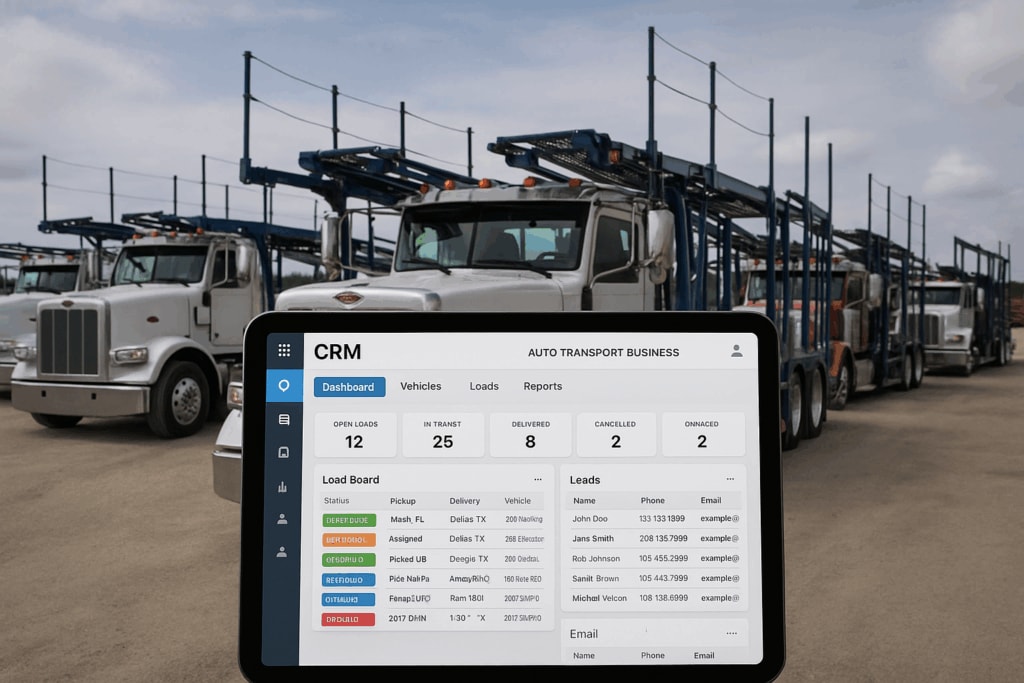
Automation saves time only when it handles repetitive tasks without requiring constant babysitting or manual corrections. Bad automation creates more problems than it solves—sending wrong messages, triggering at weird times, or requiring so much setup that you'd be faster doing it manually. Good automation runs quietly in the background while you focus on work that actually needs human judgment.
For auto transport brokers, the highest-value automation targets follow-up communication. A customer requests a quote, gets an immediate acknowledgment, receives a follow-up if they haven't responded in 24 hours, and gets notified automatically when their vehicle is assigned to a carrier. None of that requires human decision-making, but it does require sending the right message at the right time.
The Wilmington-based platform has delivered over 4 million automated texts and emails, which only happens when the automation actually works reliably. Dispatch integration (automatic syncing with load boards like Central Dispatch and Super Dispatch) represents another layer where manual data entry disappears entirely.
While some providers focus only on one piece of the puzzle, comprehensive platforms prioritize the full workflow from lead to delivery. The distinction matters because partial automation just moves the bottleneck somewhere else.
How Long Does Switching Platforms Actually Take?
Most platform switches take 7-14 days when dedicated onboarding support guides the transition from old systems to new. The fear of switching—losing data, retraining staff, experiencing downtime—keeps brokers stuck on inadequate tools longer than they should be. But modern onboarding processes have gotten much smoother.
The key variables are data migration complexity and team size. A solo broker with clean records might be fully operational in a week. A ten-person operation with years of customer history in a messy spreadsheet needs more time. Either way, the question isn't whether switching disrupts operations—it's whether that temporary disruption is worth eliminating the permanent inefficiency.
Support availability matters here too. When questions come up at 9 PM on a Thursday—and they always do during transitions—having around-the-clock access to help via email and support tickets prevents a small confusion from becoming a multi-day delay.
The operational benefits become clear quickly once teams see everything in one place:
"Using Message Plane CRM has streamlined our workflow. All customer interactions and documents are organized in one place, and the reporting tools give us better visibility into our operations. The ability to customize dashboards has been especially helpful for our dispatch team."
— Statewide Logistics, Facebook Review
Customizable dashboards let different team members see what matters most to their role, which speeds up the learning curve during transitions.
What Should Brokers Ask Before Committing to Any Platform?
Ask whether the platform handles your entire workflow or just pieces of it—partial solutions create the exact fragmentation problems you're trying to escape. The right questions reveal whether you're getting a true all-in-one system or just another tool to add to your existing stack.
Start with integration specifics. Does it connect directly to the load boards you actually use? Can it handle electronic signatures (legally binding digital document signing) without bouncing customers to a third-party service? Does it sync with your accounting software, or will you still be manually entering invoice data?
Then ask about the hidden costs. Some platforms advertise low base prices but charge extra for texting, additional users, or premium support. Others include everything in one predictable monthly rate. Knowing the total cost of ownership matters more than the sticker price.
Finally, check the support model. Can you get help when you need it, or are you limited to business hours in a timezone that doesn't match yours? For operations running loads across multiple time zones, support availability often makes or breaks the experience.
Multiple 5-star reviews highlight that the difference between platforms often comes down to these details that don't show up in feature comparison charts. Contact Message Plane CRM for specific answers about integration capabilities and support coverage.
Why Does Industry-Specific Design Beat Generic Software?
Software built for a specific industry includes the workflows, terminology, and integrations that generic platforms force you to configure from scratch. A CRM designed for auto transport brokers understands concepts like carrier packets, BOL generation (Bill of Lading creation), and rate negotiation timelines. A generic CRM makes you build all of that yourself—assuming it's even possible.
The time savings compound quickly. When dropdown menus already include the right options, when reports track the metrics that matter in your industry, and when automation templates reflect actual transport workflows, you skip months of customization work. You also avoid the frustration of discovering that something you need simply can't be done in a system designed for a different use case.
This specialization shows up in features like Rapid Rate (AI-powered pricing that reflects current market conditions) and carrier management tools designed around how transport relationships actually work. Generic software has none of that context built in.
The recognition from industry peers reflects this focus:
"Best CRM in the Game! Specifically designed for Auto Transport Brokers!"
— Transport Broker, Facebook Review
When someone working in the industry calls something "the best in the game," they're comparing it to alternatives they've actually tried. That kind of endorsement carries weight. Explore more local business insights to see how other specialized providers serve their industries.
Key Takeaways
- Auto transport brokers waste 8-12 hours weekly managing separate dispatch, calling, and payment systems
- Message Plane CRM consolidates lead tracking, carrier communication, and electronic signatures into one browser-based platform
- Wilmington-based operations benefit from centralized conversation logs that eliminate digging through scattered emails and texts
- Automated follow-up systems through Message Plane have delivered over 4 million texts and emails for active users
- Onboarding typically takes 7-14 days with dedicated support available around the clock
Frequently Asked Questions
What problems do brokers face when using multiple software tools?
Brokers waste 8-12 hours weekly switching between separate systems for dispatch, calling, and payments. Information gaps cause miscommunication, duplicate data entry, and difficult dispute resolution. Message Plane CRM eliminates these issues by centralizing all operations in one searchable platform with automatic data syncing.
How long does it take to switch CRM platforms in auto transport?
Most platform transitions take 7-14 days with dedicated onboarding support. Timeline depends on data migration complexity and team size. Solo brokers with clean records often finish in one week, while larger operations need the full two weeks for complete staff training and historical data transfer.
What features should an auto transport CRM include?
Essential features include load board integration with Central Dispatch and Super Dispatch, electronic signatures, automated follow-up messaging, carrier management, and accounting software sync. Message Plane CRM includes all these plus AI-powered pricing through their Rapid Rate system and customizable dashboards for dispatch teams.
Is specialized auto transport software worth the cost over generic CRMs?
Industry-specific software saves months of customization work that generic platforms require. Built-in workflows for carrier packets, BOL generation, and rate negotiation eliminate manual setup. The time savings typically offset any price difference within the first few months of use.
Can auto transport brokers access their CRM from any device?
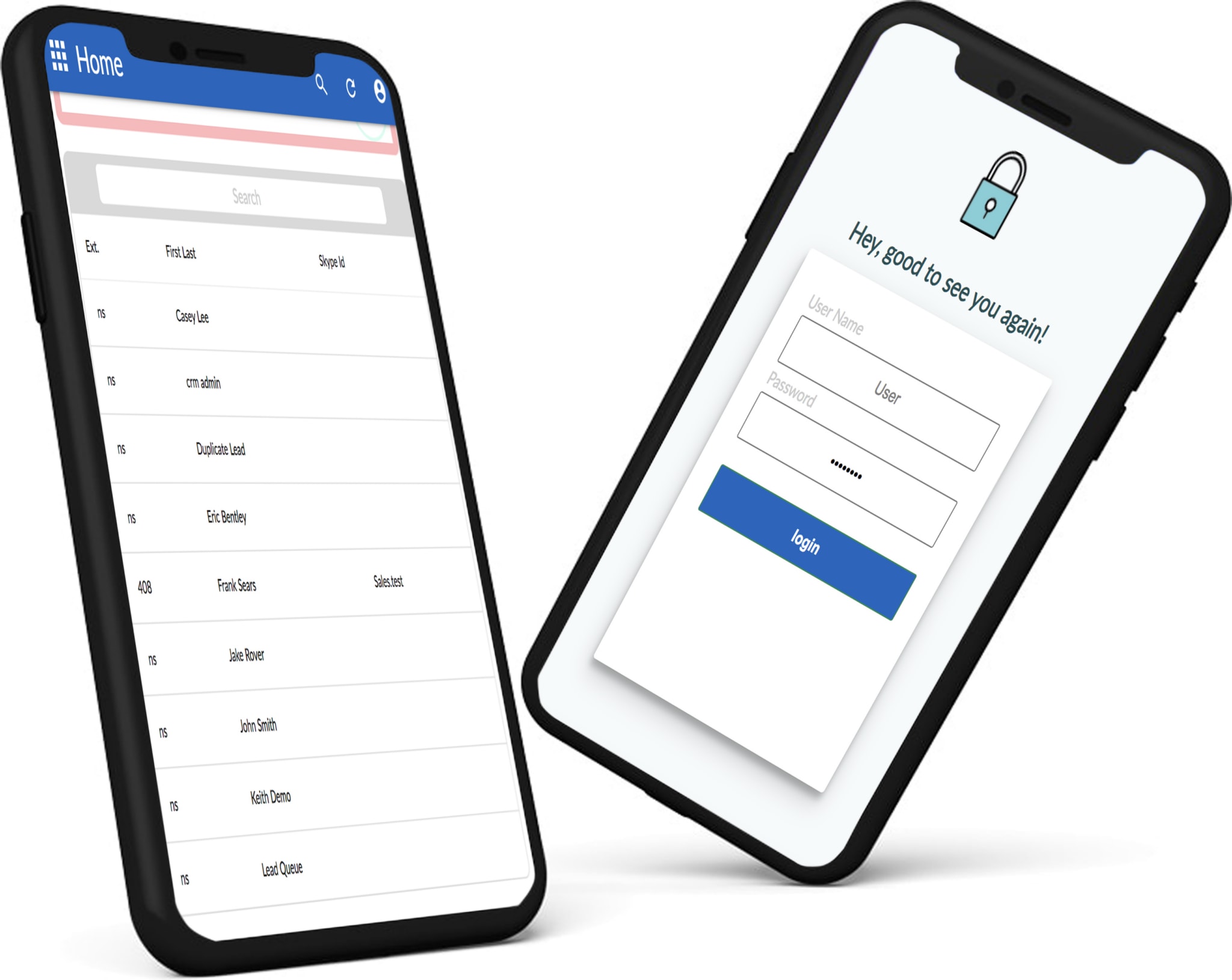
Browser-based platforms work across all devices with internet access without requiring app downloads. This means dispatchers can manage loads from laptops, tablets, or phones equally. Message Plane CRM operates entirely through web browsers, making it accessible from any location with connectivity.
Contact Message Plane CRM
Address: 1207 Delaware Ave #4442, Wilmington, DE 19806
Phone: +18442758555
Website: https://messageplane.com/


.svg)

%20(1).avif)

.svg)




.svg)











%20(1).avif)
%20(1).avif)